
What is IVF?
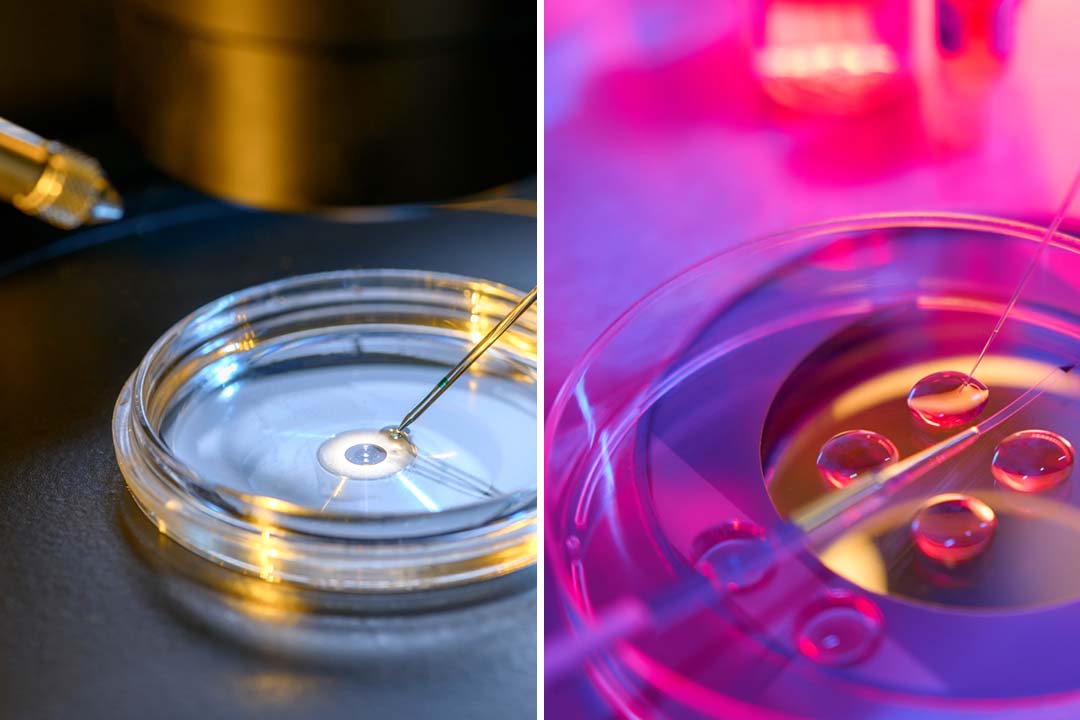
In vitro fertilization (IVF) involves combining an egg and sperm in a laboratory dish. The basic steps of an IVF cycle are:
- Ovarian Stimulation: The woman takes daily hormone injections for about 8–14 days. These medications stimulate her ovaries to produce multiple mature eggs instead of the single egg released in a natural cycle.
- Egg Retrieval: When the eggs reach the right size, the doctor uses a thin needle, guided by ultrasound, to collect them from the ovaries under light sedation.
- Fertilization: In the lab, technicians place the retrieved eggs into a culture dish with sperm from the partner or a donor. The sperm and eggs are left together so that fertilization can occur naturally.
- Embryo Culture: The fertilized eggs (embryos) grow in the lab for 2–5 days. Embryologists monitor their development and select the healthiest embryos for transfer.
- Embryo Transfer: One or two embryos are placed through the cervix into the uterus using a thin catheter. Any extra high-quality embryos can be frozen for future use.
- Pregnancy Test: About two weeks after transfer, a blood test measures hCG levels to confirm pregnancy. If the test is positive, an early ultrasound follows to check embryo development.
IVF suits many causes of infertility, including blocked fallopian tubes, endometriosis, unexplained infertility, and mild male-factor issues.
What Is ICSI?
Intracytoplasmic sperm injection (ICSI) is a specialized form of IVF. It uses the same ovarian stimulation, egg retrieval, embryo culture, and transfer steps, but it differs at the fertilization stage:
Single-Sperm Injection
Instead of placing many sperm near the eggs, a skilled embryologist selects a single healthy sperm and injects it directly into each egg with a fine glass needle.
ICSI was developed to overcome severe male-factor infertility, such as very low sperm count, poor sperm motility, or abnormal sperm shape. It also helps when previous IVF cycles have failed due to poor fertilization rates.
Key Differences Between IVF and ICSI
| Feature | IVF | ICSI |
| Fertilization method | Sperm and eggs mixed together in a dish | Single sperm injected directly into each egg |
| Main indication | Female infertility, unexplained infertility | Severe male-factor infertility, low fertilization |
| Cost per cycle (INR) | ₹150,000 – ₹250,000 | ₹240,000 – ₹250,000 |
| Typical fertilization rate | 50%–70% of eggs fertilize naturally | Up to 80% of eggs fertilize via injection |
| Success rate (live birth) | 30%–40% (varies by age and clinic) | Similar to IVF if eggs and embryos are healthy |
| Risk of fertilization failure | Higher in severe male-factor cases | Low, even with very poor sperm quality |
| Risk of birth defects | Slight increase over natural conception | Slightly higher than IVF in some studies |
| Time in lab | Fertilization 16–20 hours | Immediate, during micromanipulation |
| Laboratory skill required | Standard embryology techniques | Advanced micromanipulation expertise |
Who Should Consider IVF?
IVF offers a less invasive fertilization approach and works well when sperm quality is adequate to fertilize eggs in a dish. Couples may choose IVF when:
- The woman has blocked or damaged fallopian tubes.
- Endometriosis affects fertility.
- Previous treatments (such as intrauterine insemination) failed.
- The infertility cause is unexplained.
- Mild male-factor issues exist but do not severely impact fertilization.
Who Needs ICSI?
ICSI can overcome almost any issue with sperm function by mechanically injecting a single sperm into each egg. ICSI is recommended when:
- The male partner has very low sperm count (oligospermia), poor sperm movement (asthenozoospermia), or abnormal sperm shape (teratozoospermia).
- Sperm retrieval techniques (e.g., testicular aspiration) yield very few sperm.
- Previous IVF cycles resulted in low or no fertilization.
- Couples use frozen or donor eggs with uncertain sperm quality.
Success Rates: IVF vs. ICSI
Success in assisted reproduction depends mainly on the woman’s age, ovarian response, and embryo quality. On average:
Women under 35
Live birth rates per IVF cycle range from 40% to 50%. ICSI success rates are similar when male fertility is not severely limiting fertilization.
Women aged 35–40
IVF live birth rates drop to 25%–35%, and ICSI offers comparable outcomes if eggs and embryos are healthy.
Women over 40
IVF and ICSI live birth rates fall below 15% per cycle.
Evidence shows that performing ICSI routinely in cases without severe male infertility does not improve live birth rates compared to standard IVF.
Costs of IVF and ICSI in India
Both IVF and ICSI involve significant expenses. In India, the typical costs per cycle are:
- IVF: ₹150,000 – ₹250,000
- ICSI: ₹240,000 – ₹250,000
ICSI (Intracytoplasmic Sperm Injection) is generally more expensive than IVF (In Vitro Fertilization). ICSI is a more advanced technique which involves injecting sperm directly into the egg, while IVF simply combines eggs and sperm for fertilization.
These figures include medications, monitoring scans, egg retrieval, fertilization, embryo culture, and embryo transfer. They do not cover frozen embryo transfer (FET) in later cycles, which can cost an additional ₹50,000–₹80,000 per attempt.
Many couples undergo multiple cycles, increasing overall expenses. Some patients use frozen embryos from a previous cycle, reducing costs for subsequent transfers.
Risks and Side Effects
Ovarian Hyperstimulation Syndrome (OHSS)
Fertility drugs can overstimulate the ovaries, causing OHSS. Symptoms range from mild bloating to severe pain, vomiting, and fluid imbalances. Clinics monitor hormone levels and adjust medication dosages to reduce OHSS risk.
Multiple Pregnancy
Transferring more than one embryo raises the chance of twins or triplets. Multiple pregnancies carry higher risks of preterm birth and low birth weight. Many clinics now transfer just one embryo (single embryo transfer) to minimize these risks.
Embryo Damage or Loss
During egg retrieval or embryo manipulation, some eggs may get damaged. In ICSI, the injection process can occasionally harm the egg.
Birth Defects
Children born via IVF or ICSI have a slightly higher risk of certain birth defects compared to naturally conceived babies. The absolute risk remains low (around 3% vs. 2% baseline). Long-term studies continue to monitor outcomes.
Making the Right Choice
Choosing between IVF and ICSI depends on:
- Sperm quality: Severe male-factor infertility points to ICSI.
- Previous ART cycles: Poor fertilization in IVF suggests ICSI.
- Cost: ICSI is more expensive; IVF may suffice if sperm parameters are good.
- Clinic expertise: A center’s success rates and staff experience matter.
- Patient preference: Some couples opt for ICSI for perceived higher fertilization rates, even when IVF could work.
Discuss your specific situation with a reproductive endocrinologist. Your doctor can recommend the method most likely to achieve pregnancy by reviewing your medical history, test results, and personal priorities
Conclusion
IVF and ICSI are powerful tools in the fight against infertility. Both techniques fertilize eggs outside the body, but they differ in how sperm is introduced to the egg.
IVF allows sperm to fertilize naturally in a dish, while ICSI uses direct injection of a single sperm into each egg. ICSI offers a solution for severe male-factor infertility and IVF failures, but it comes at a higher cost and requires advanced lab expertise.
Success rates for both methods depend largely on the woman’s age and egg quality. When sperm parameters are adequate, standard IVF often achieves outcomes similar to ICSI.
Couples should consider factors such as sperm quality, treatment cost, clinic expertise, and emotional impact when choosing between IVF and ICSI. Open communication with your fertility specialist will help you make the best decision for your journey to parenthood.

About Us
AKsigen IVF is a premier center for advanced fertility treatments, with renowned fertility experts on our team. Specializing in IVF, ICSI, egg freezing, and other cutting-edge reproductive technologies, AKsigen IVF is committed to helping couples achieve their dream of parenthood. With personalized care and a patient-first approach, AKsigen IVF provides comprehensive fertility solutions under one roof.



 +91 86556 78747
 info@aksigenivf.com