
Get in Touch with Our Fertility Specialists at Aksigen IVF Today!
of experience in Women's Health
of experience in IVF Treatment
Cases Completed
Success Rate
Embryo freezing, also known as embryo cryopreservation, is a process where embryos are frozen and stored at extremely low temperatures for future use. An embryo refers to a female egg fertilized by a male sperm.
After an IVF cycle, any healthy embryos that are not transferred immediately can be frozen and stored. This allows couples to preserve fertility, plan pregnancy at a later stage, or have additional embryos available for future IVF cycles.
Embryos are stored in liquid nitrogen at –196°C using advanced methods that prevent damage and maintain long-term viability.
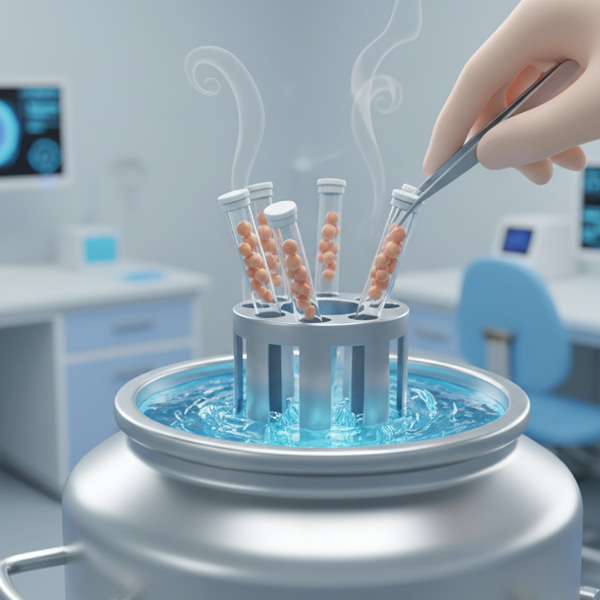
People choose embryo freezing for several important reasons. It helps preserve fertility before medical treatments like chemotherapy or radiation that may affect reproductive health.
Many individuals or couples may also freeze embryos to delay parenthood for personal, professional, or medical reasons. During IVF, more embryos may develop than can be transferred in one cycle, and freezing offers a safe way to store them for later attempts.
Frozen embryos also reduce the need for repeated ovarian stimulation, saving both time and cost while improving chances of successful pregnancy in future IVF cycles.
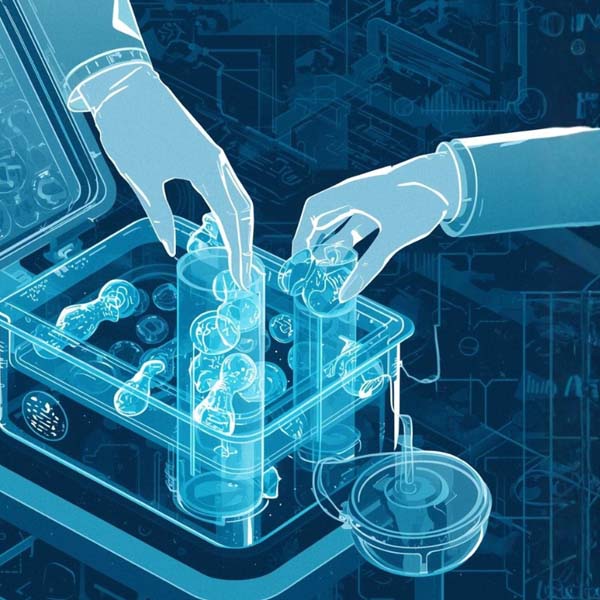
Embryo freezing begins with ovarian stimulation, where hormonal medications help produce multiple mature eggs. These eggs are retrieved through a minimally invasive procedure and fertilized with sperm through IVF or ICSI.
Embryos are monitored for several days in the lab until they reach the ideal stage for freezing. A cryoprotectant solution is added to protect cells before freezing.
The embryos are then rapidly cooled using vitrification and stored in liquid nitrogen. When needed, they are thawed, assessed for viability, and transferred into the female uterus (womb).
When selecting a clinic for embryo freezing, you should consider several important factors. Look for the availability of advanced laboratory technology, skilled embryologists, a strong track record, and transparent cost structures.
The center should use modern vitrification methods, which offer high embryo survival rates. Also assess the clinic’s success rates for frozen embryo transfer, long-term storage facilities, safety protocols, and personalized counselling services.
A good fertility center guides you through consent, legal considerations, storage duration, and future usage of embryos with complete clarity and support.
Aksigen IVF is recognized as one of the best embryo freezing centers in Mumbai, combining clinical expertise with advanced technology. Some important reasons for choosing us are:
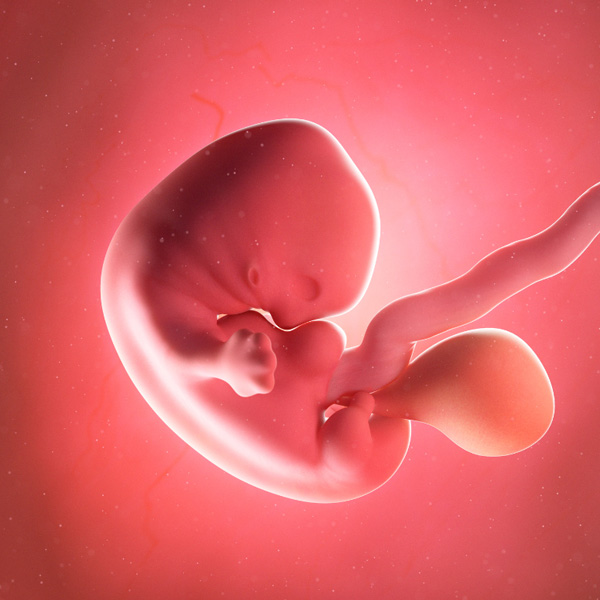
An embryo is the earliest stage of human development, formed when a sperm successfully fertilizes an egg. In assisted reproductive treatments, forming healthy embryos is a key step before pregnancy can occur.
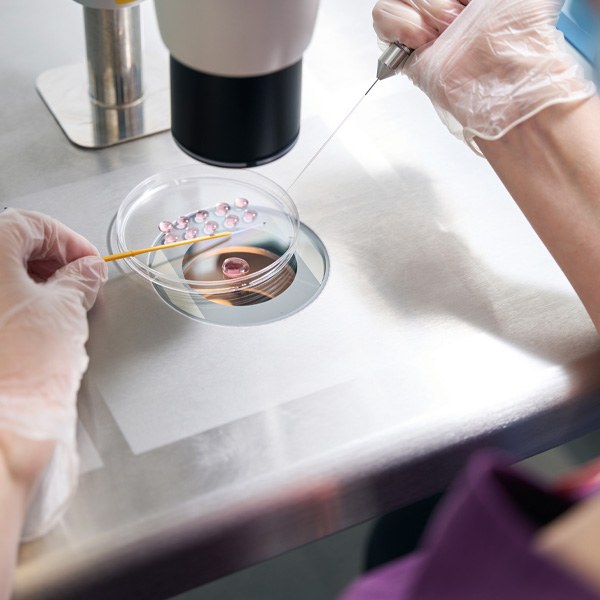
In IVF (In Vitro Fertilization), mature eggs collected from the female ovaries are placed in a petri dish and mixed with active male sperm. Fertilization occurs naturally in the lab when a sperm penetrates the egg. The resulting embryos are then monitored for their growth and quality.
In ICSI (Intracytoplasmic Sperm Injection), embryologists take a more advanced approach by selecting a single, healthy sperm and injecting it directly into each egg using a microneedle. This technique is especially useful when sperm count, motility, or morphology is very low.
In both methods, once fertilization happens, the embryo develops over 3 to 5 days into stages like cleavage or blastocyst. The best-quality embryo is then chosen for transfer into the uterus to improve the chances of successful implantation and pregnancy either immediately or frozen for later use, depending on treatment plans and medical recommendations.
Aksigen IVF offers the best embryo freezing in Mumbai under the care of well-trained embryologists using safe and advanced technology. Embryo freezing is generally recommended for the following people:
There are two primary methods that are used for embryo freezing, including the following:
Most advanced clinics, including Aksigen IVF, use vitrification for optimal embryo preservation.
Embryo freezing offers several key advantages, including the following:
Aksigen IVF uses a stepwise approach while delivering a safe, painless, and effective embryo freezing procedure in Mumbai. The various steps involved are:
The initial embryo freezing cost in Mumbai generally varies between INR 20,000 to INR 25,000, along with additional annual storage costs. This cost will, however, vary based on multiple factors, such as:
At Aksigen IVF, an affordable yet effective embryo freezing option is offered to couples to help them conceive without any financial burden, making it among the most trusted embryo freezing centres in Mumbai.
Although embryo freezing is generally safe and effective, it may be associated with some risks, like:
Embryo freezing success rate in Mumbai generally varies between 40% to 50%. The use of advanced vitrification techniques and modern embryo freezing ensures embryo survival rates and pregnancy rates comparable to fresh embryo transfers.
Many top clinics achieve embryo survival rates of over 90% after thawing. Aksigen IVF reports an overall fertility success rate of more than 50%, supported by a strong embryology team and state-of-the-art lab, making it a reliable choice for frozen embryo transfer cycles.
The success rates will vary based on certain factors, such as:
Book your appointment with the fertility experts at Aksigen IVF today to experience quality care at a top embryo freezing clinic in Mumbai and plan your pregnancy at your convenience without any stress!
Embryos can stay frozen for many years without losing quality. Studies show successful pregnancies even after 10 to 15 years of storage. The actual storage duration depends on clinic policies and local regulations, but usually, embryos can remain viable for decades.
With the introduction of modern vitrification methods, freezing does not harm embryo quality. Almost all embryos survive the thawing process with excellent developmental potential. Survival rates are high, and outcomes with frozen transfers are usually equal to or better than fresh embryo transfers.
Frozen embryo transfer is a simple, minimally invasive procedure. Most women feel no pain apart from slight discomfort during the procedure. It usually does not require anesthesia, and normal activities can be resumed soon after the procedure in most cases.
Research shows babies born from frozen embryos are as healthy as those from fresh transfers. There is no increased risk of birth defects or developmental issues. In some studies, frozen transfers are associated with slightly better pregnancy outcomes.
All good-quality embryos not used during the fresh embryo transfer during an IVF cycle are generally frozen. Freezing more embryos provides multiple chances for pregnancy in future cycles without repeating egg retrieval, making the treatment safer and more cost-effective.
The chance of twins depends on the number of embryos transferred, not on whether they are fresh or frozen. Most clinics recommend transferring a single embryo (either fresh or frozen) to reduce risks, but twin pregnancies can occur if multiple embryos are transferred.


 +91 86556 78747
 info@aksigenivf.com


