Get in Touch with Our Fertility Specialists at Aksigen IVF Today!
of experience in Women's Health
of experience in IVF Treatment
Cases Completed
Success Rate
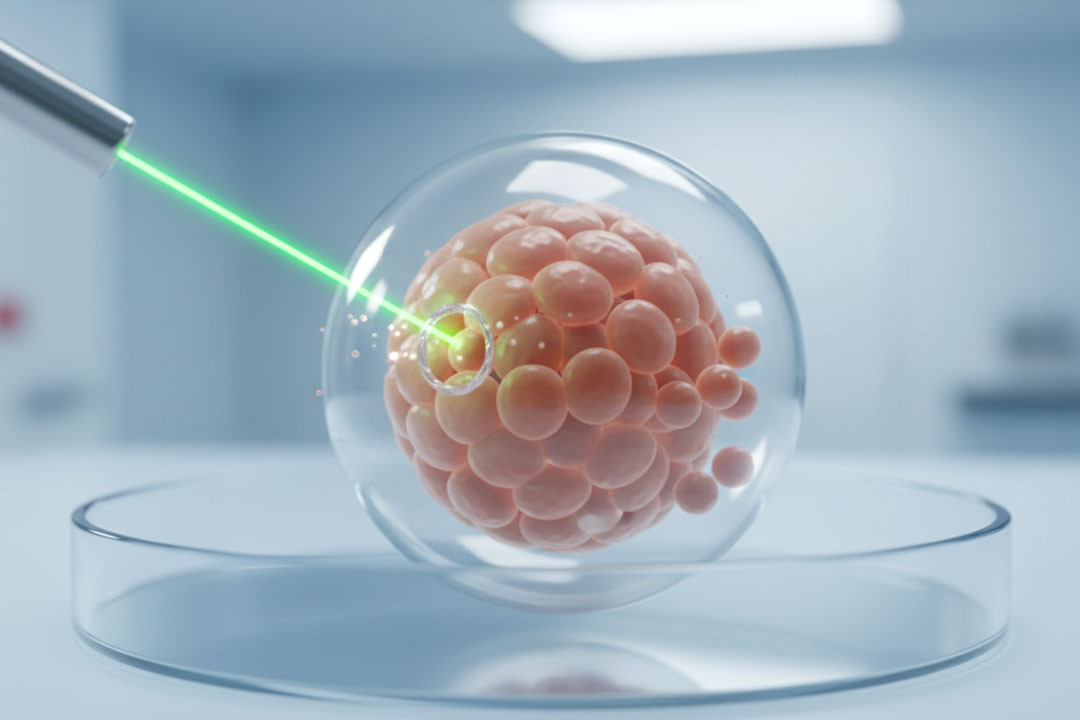
Laser assisted hatching is an advanced embryology technique used during IVF (in vitro fertilization) to help embryos implant more effectively in the uterine lining of a woman and result in a pregnancy.
Every embryo is surrounded by a protective outer layer, called the zona pellucida. Sometimes, this shell becomes too thick or rigid, making it difficult for the embryo to naturally break out and implant.
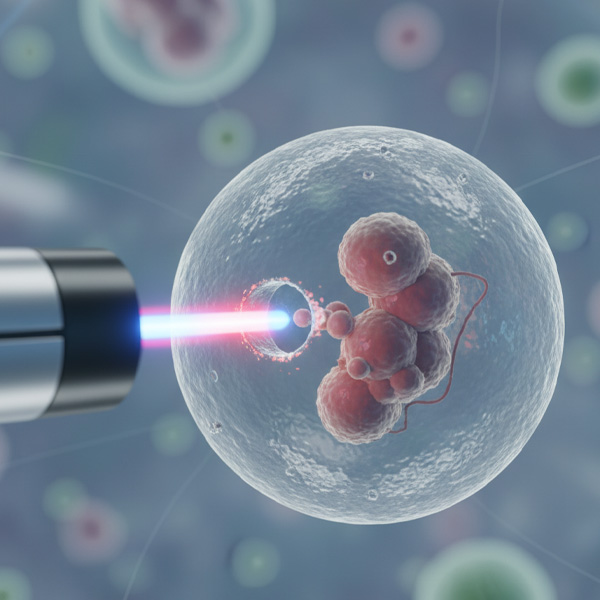
Laser assisted hatching uses a highly precise laser to create a tiny opening in the shell, making the hatching process easier. This improves the embryo’s chances of attaching to the uterus.
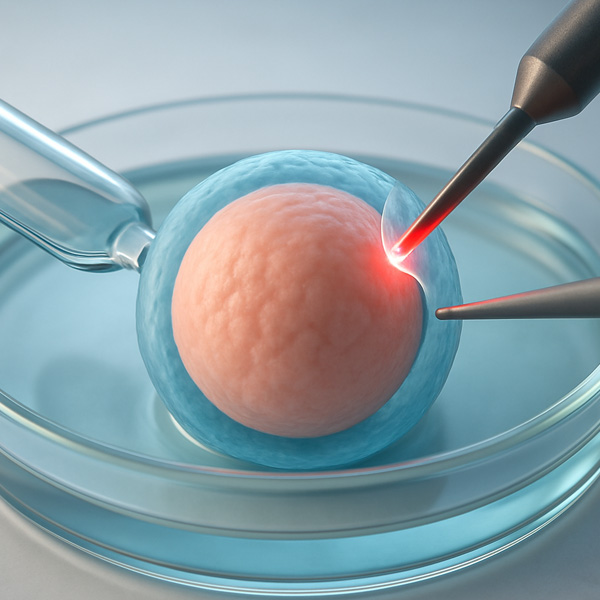
Laser assisted hatching is recommended when embryos show difficulty in breaking out of the zona pellucida, especially in certain clinical situations.
Women of advanced maternal age, those with poor-quality embryos, previous failed IVF cycles, or frozen embryo transfers may benefit significantly from this technique.
Additionally, couples with high FSH (follicle-stimulating hormone) levels, elevated embryo fragmentation, or thickened zona pellucida are ideal candidates for the procedure.
The procedure helps support the embryo’s natural hatching process, improving implantation potential and overall success rates. It is a safe, effective, and widely used enhancement in modern IVF treatments.
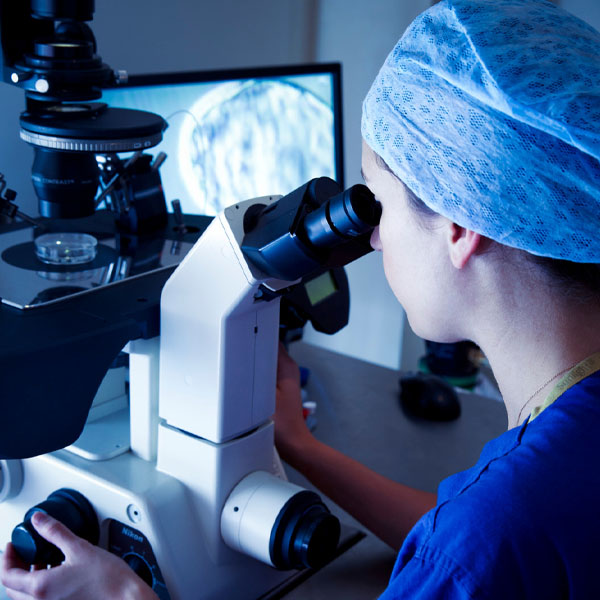
The procedure involves the use of a high-precision, non-contact infrared laser to gently thin or create an opening in the zona pellucida. The embryologist carefully targets the outer shell without touching or harming the embryo itself.
Because the laser delivers controlled bursts of energy, the process is extremely quick, safe, and consistent compared to mechanical or chemical hatching methods. The embryo remains in optimal temperature-controlled conditions throughout.
Once transferred into the uterus, the modified shell allows the embryo to hatch more easily, promoting better interaction with the endometrium and increasing the likelihood of implantation and pregnancy.
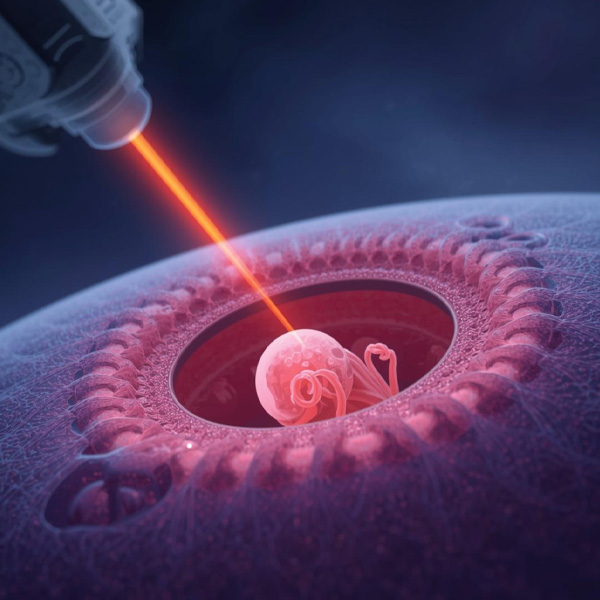
Selecting the right IVF center is important to maximizing the benefits of laser assisted hatching. A reliable clinic should have experienced embryologists, advanced laser equipment, and a strong track record in embryology techniques.
The center must follow strict laboratory protocols, maintain optimal culture conditions, and ensure precision in handling embryos. It is equally important to choose a clinic with transparent treatment processes, ethical practices, and high success rates in assisted reproduction.
A center that tailors treatment based on the patient’s history and embryo quality can significantly improve outcomes with laser assisted hatching.
Aksigen IVF is reputed as one of the finest centers for laser assisted hatching in Mumbai, using modern technology and clinical expertise. Some important reasons for choosing us are:
At Aksigen IVF, our experienced fertility specialist will evaluate each case carefully before determining if a particular individual is a good candidate for undergoing laser assisted hatching technique in Mumbai. Ideal candidates may include:
Laser assisted hatching provides many potential advantages for patients undergoing assisted reproductive techniques like IVF, including the following:
Aksigen IVF uses a stepwise approach while delivering a safe and effective laser assisted hatching procedure in Mumbai. The various steps involved in the procedure are:
The laser assisted hatching cost in Mumbai typically ranges from approximately INR 15,000 to INR 26,000 depending on the clinic and treatment plan. The exact cost may vary based on several factors such as:
Although laser assisted hatching is considered very safe, it may be associated with certain risks, such as:
Our skilled embryologists at Aksigen IVF ensure that the embryos are handled with care and precision, minimizing the chances of complications associated with the laser assisted hatching process.
In many patients, laser assisted hatching can improve the success rates of implantation, pregnancy, and childbirth using IVF or ICSI by 5% to 10%. Reputed clinics like Aksigen IVF report overall IVF with laser assisted hatching success ranging as high as 75% to 95%.
The laser assisted hatching success rate in Mumbai will, however, vary based on several factors, such as:
Book your appointment with our fertility experts at Aksigen IVF to undergo the best laser assisted hatching in Mumbai in a safe and sterile environment to increase your chances of a successful pregnancy today!
No, laser assisted hatching is not painful because it is performed on embryos in the lab, not on the patient. It does not involve any physical discomfort or additional procedures for a woman undergoing IVF or ICSI treatment.
Yes, laser assisted hatching is considered very safe when performed by trained embryologists using modern laser systems. The non-contact laser ensures no physical handling of the embryo, reducing the risk of embryo damage or contamination.
No procedure can guarantee pregnancy, but laser assisted hatching improves the chances of implantation for many patients. It is especially helpful in cases where the embryo struggles to hatch naturally. It is an add-on procedure that supports better outcomes rather than a standalone fertility treatment.
No, laser assisted hatching is not needed in every case. It is used only when medically beneficial, such as in cases of advanced maternal age, certain embryo characteristics, or repeated implantation failure. Your fertility doctor will recommend the procedure only when evidence suggests it may improve the chances of success.
No, laser assisted hatching has no negative effect on fetal development. The laser works only on the protective shell and does not interact with the embryo’s cells. Babies born after laser assisted hatching have outcomes similar to those conceived through standard IVF treatment.
Laser assisted hatching may slightly increase the chances of twins only if more than one embryo is transferred. The technique itself does not cause twins. Multiple pregnancies depend on the number of embryos placed into the uterus during IVF transfer.


 +91 86556 78747
 info@aksigenivf.com


