
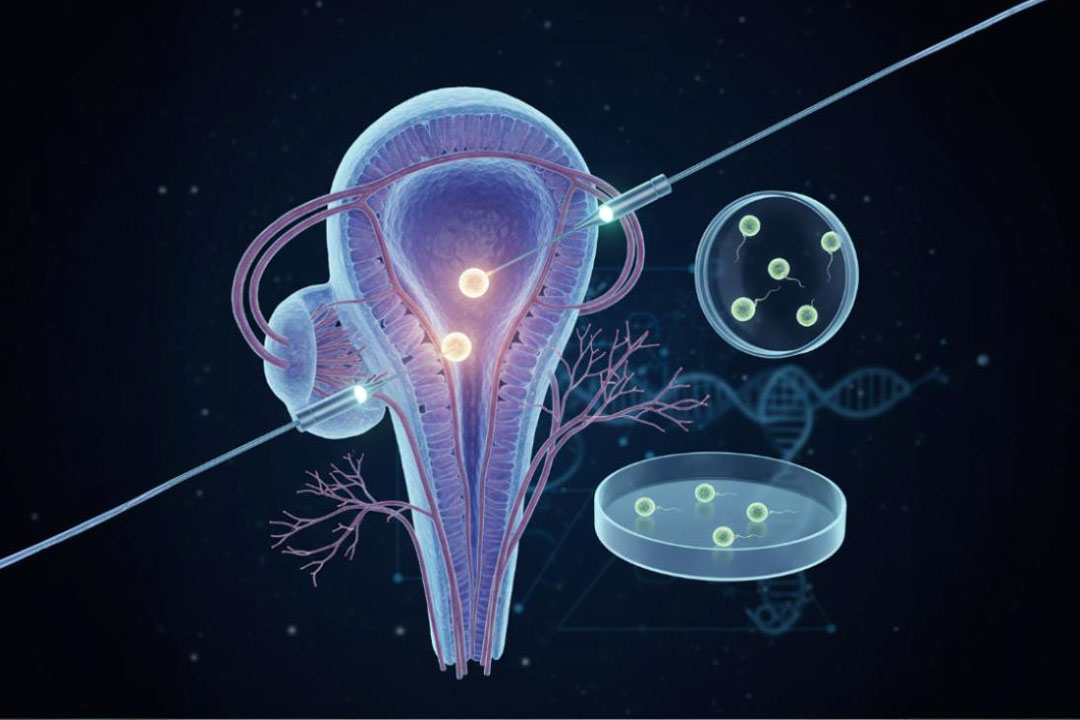
Fertility journeys don’t always follow a straight line. Some men discover that their semen contains no detectable sperm despite trying for months or years. This is called non obstructive azoospermia, a condition where the testes make too few (or no) sperm to appear in the ejaculate.
It can stem from genetic factors, hormone imbalances, prior illness or treatment, enlarged scrotal veins (varicocele), or medication exposures.
The good news: a thoughtful, step-by-step plan confirming the diagnosis, addressing reversible causes, and considering surgical sperm retrieval with in-vitro techniques does help many couples conceive, including in India where assisted reproduction is regulated and widely available.
Treatments range from lifestyle and endocrine therapy to microscopic sperm extraction paired with intracytoplasmic sperm injection (ICSI). The right path depends on the exact cause, your partner’s age and fertility status, and your goals.
This article explains how diagnosis works, what treatments are offered in India, and how to choose a safe, ethical clinic.
What is Non Obstructive Azoospermia?
Non obstructive azoospermia means the testes are not producing enough mature sperm to show up in semen, unlike “obstructive” azoospermia where sperm production is normal but a blockage prevents sperm from reaching the ejaculate. It accounts for a significant fraction of severe male-factor infertility and needs a different evaluation and treatment plan from obstructive causes.
How is Non Obstructive Azoospermia Diagnosed in Practice?
Diagnosis starts with at least two semen analyses plus targeted blood tests and genetic screening. Labs first perform a standard semen analysis; if no sperm are seen, the sample is centrifuged and the “pellet” is examined to look for rare sperm (sometimes called cryptospermia).
Hormone tests (FSH, LH, testosterone–prolactin and estradiol), a detailed history and examination, and genetic tests help pinpoint the cause and guide treatment. Imaging is used selectively. These steps are recommended by major international guidelines, and Indian labs typically follow the WHO semen manual (6th edition).
Key Diagnostic Techniques
Repeat semen analyses with pellet assessment when the first shows no sperm.
- Hormones: high FSH may indicate impaired sperm production; low gonadotropins suggest a treatable pituitary/hypothalamic issue.
- Genetics: karyotype (e.g., Klinefelter syndrome) and Y-chromosome microdeletions (AZF regions) are common in severe testicular failure and guide expectations for sperm retrieval and inheritance counseling.
What Causes Non Obstructive Azoospermia?
Multiple factors can disrupt sperm production; some are reversible and some are not.
- Genetic causes: Klinefelter syndrome (extra X chromosome) and AZF microdeletions on the Y chromosome are well-recognized. AZFc deletions, in particular, may still allow sperm retrieval in a proportion of men. Sons inherit Y-linked deletions, so counseling is essential.
- Hormonal causes: Hypogonadotropic hypogonadism (inadequate brain signals to the testes) can suppress spermatogenesis but often improves with hormone therapy.
- Varicocele: Enlarged scrotal veins can impair testicular temperature regulation and sperm production in some men.
- Chemo/radiation and toxins: Cancer treatments and certain chemicals can damage sperm production; banking sperm before therapy is advised when possible.
- Medications and hormones: Exogenous testosterone and anabolic steroids commonly shut down the body’s own sperm production and can cause azoospermia; stopping and using specific therapies can reverse this over months.
First Things First: Address Reversible Factors
Stopping gonadotoxic exposures and correcting hormones can restore sperm in selected men.
Stop external testosterone/androgenic supplements (including “boosters” bought online). Most men recover sperm within months after discontinuation; some benefit from hCG-based regimens under specialist care.
Treat endocrine problems (e.g., hypogonadotropic hypogonadism) with hCG and FSH to stimulate the testes to make sperm.
Managing weight, sleep, and smoking helps overall fertility health, though it rarely “cures” established non obstructive azoospermia by itself.
Can Varicocele Repair Help in Non Obstructive Azoospermia?
Sometimes, yes. Particularly when a palpable varicocele is present. In carefully selected men with non obstructive azoospermia and a clinical varicocele, microscopic repair can lead to the return of sperm in the ejaculate in roughly one-third to almost one-half of cases, though results vary and some men still need sperm extraction later.
When Sperm is Not Found in Semen: Surgical Retrieval Paired with ICSI
If ejaculated sperm is absent despite optimization, the next step is testicular sperm retrieval, most commonly microdissection testicular sperm extraction (micro-TESE) with ICSI. Micro-TESE uses an operating microscope to identify promising tubules while minimizing tissue removal, and it is the technique recommended by major guidelines for non obstructive azoospermia. Retrieved sperm (fresh or frozen) can then be injected into eggs in the lab (ICSI).
What to Expect from Micro-TESE
Overall sperm retrieval rates vary by cause and histology. Large series report around 40% retrieval on average, with higher rates in some conditions (e.g., prior orchitis or partial AZFc deletions) and lower in others. Success is not guaranteed, but micro-TESE offers the best chance when production is patchy.
Micro-TESE improves the chance of finding rare foci of spermatogenesis while removing less tissue, which aligns with current recommendations.
Treatment of Non Obstructive Azoospermia in India: What’s Available and How Care is Regulated
Treatment for Non Obstructive Azoospermia (NOA) in India primarily involves hormone therapy to stimulate sperm production and surgical sperm retrieval techniques like TESE or Micro-TESE to collect sperm directly from the testes.
The retrieved sperm are then used in Intracytoplasmic Sperm Injection (ICSI), a form of In Vitro Fertilization (IVF), to achieve pregnancy. Genetic counseling and testing may also be beneficial if genetic factors are suspected.
Treatment Approaches
- Hormonal Therapy: If hormonal imbalances are the cause of NOA, hormone medications (like FSH and HCG) can be prescribed to stimulate sperm production. Hormone levels are regularly monitored to assess the effectiveness of the treatment. It's a prolonged course of injectables, often lasting 12-18 months.
- Surgical Sperm Retrieval: This is crucial for men with NOA, where sperm may be produced in small pockets but not found in the semen.
- TESE (Testicular Sperm Extraction): Sperm are extracted directly from the testicular tissue.
- Micro-TESE (Microscopic Testicular Sperm Extraction): A more refined technique where sperm pockets are identified and extracted under a microscope.
- MESE (Microscopic Epididymal Sperm Extraction): Used to collect sperm from the epididymis.
- Assisted Reproductive Techniques (ART) includes IVF-ICSI. The gold standard for NOA. Once sperm is retrieved, it is injected directly into an egg during IVF to facilitate fertilization and create embryos.
- Genetic Counseling and Testing: For cases linked to genetic factors (e.g., Klinefelter syndrome or Y-chromosome microdeletions), genetic counseling helps understand the condition and screen for potential genetic disorders.
Frequently Asked Questions
Most men recover within 3–12 months, sometimes up to a year; doctors may use hCG and FSH, SERMs or aromatase inhibitors to speed recovery in appropriate cases. Do not restart any androgen without discussing fertility.
Sons of men with Y-chromosome AZF deletions will inherit the deletion; genetic counseling is recommended before ICSI to discuss implications and options.
It’s done under anesthesia through a small incision. Most men go home the same day and recover over a few days. Using a microscope reduces the amount of tissue removed and lowers the risk of testicular damage compared to blind biopsies. Discuss personal risks with your surgeon.
No. In selected men, sperm reappears in ~one-third to nearly half; in others it does not, and micro-TESE may still be needed. Results can also be transient.
The ART Act regulates clinics and banks, but specific tests are guided by medical indications and international best practice. For azoospermia, karyotype and Y-deletion testing are recommended by professional guidelines to inform prognosis and counseling.
Some couples consider donor sperm or adoption. Your team can discuss these paths with sensitivity and provide counseling support. (General information—talk through personal options with your clinician.)
Conclusion
Non obstructive azoospermia is challenging, but it is not the end of the road. With a structured approach confirming the diagnosis, removing reversible roadblocks, choosing targeted treatments like hormone therapy or varicocele repair when appropriate, and using micro-TESE with ICSI when needed, many couples achieve pregnancy.
In India, make sure you choose a registered clinic, ask detailed questions, and ensure genetics and counseling are part of care.
Partner-centric planning (considering the female partner’s age and fertility) and clear communication with your team will help you decide when to try conservative steps and when to proceed to surgical retrieval and ICSI.
Evidence-based care and ethical practice are the key ingredients for the best possible chance.

About Us
AKsigen IVF is a premier center for advanced fertility treatments, with renowned fertility experts on our team. Specializing in IVF, ICSI, egg freezing, and other cutting-edge reproductive technologies, AKsigen IVF is committed to helping couples achieve their dream of parenthood. With personalized care and a patient-first approach, AKsigen IVF provides comprehensive fertility solutions under one roof.



 +91 86556 78747
 info@aksigenivf.com