
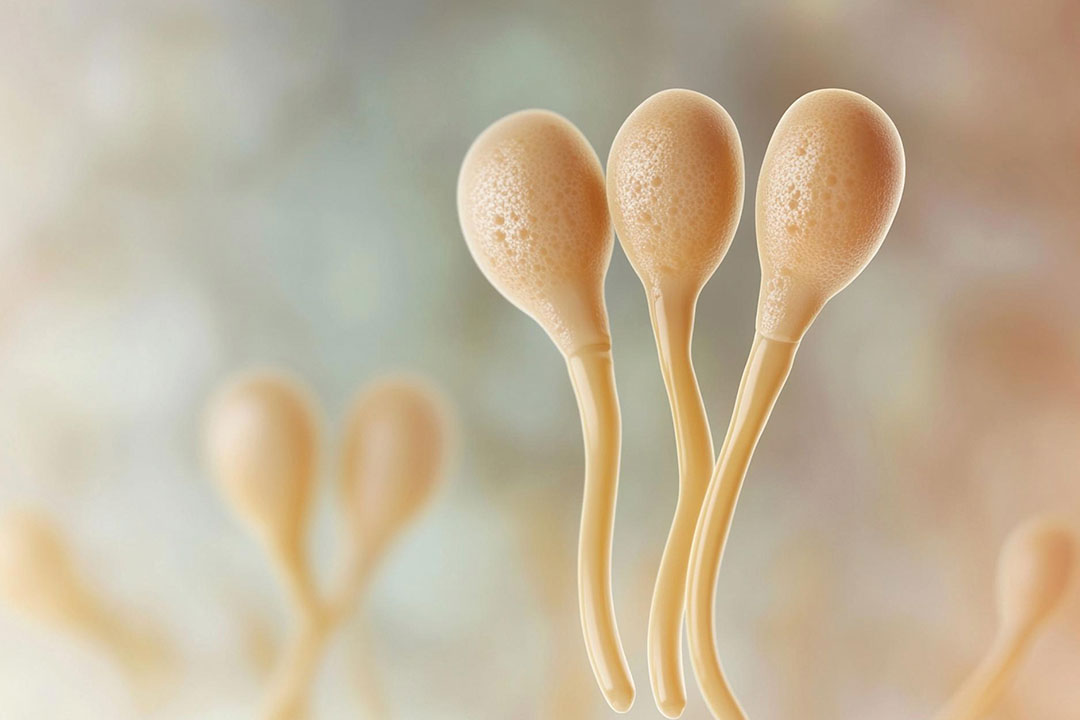
Male fertility doesn’t get talked about as much as it should, yet it contributes equally to a couple’s chances of conceiving. One common issue is teratozoospermia which is a higher-than-usual share of abnormally shaped sperm in a semen sample.
Sperm shape (morphology) matters because the head, midpiece, and tail must work together for the cell to swim, reach the egg, and penetrate it. When too many sperm are misshapen, the odds of natural conception can drop, though it does not make pregnancy impossible for everyone.
Many men with poor morphology still become fathers, either naturally or with help. This article explains what teratozoospermia is, how doctors classify it, what causes it, the symptoms (or lack of them), and the full range of teratozoospermia treatment options from lifestyle steps to assisted reproductive techniques.
What is Teratozoospermia?
Teratozoospermia means a high proportion of sperm have abnormal shape (morphology) on a semen analysis. In most labs, morphology is graded using strict criteria that count what percentage of sperm look “normal” across the head, midpiece, and tail.
Many laboratories historically used a cut-off of <4% normal forms to label a sample as teratozoospermic; today, exact reference ranges can differ by lab and guideline. The key idea is simple: the lower the share of normally shaped sperm, the harder it may be for sperm to move well and bind to the egg.
Why Shape of the Sperm Matters?
The sperm morphology and health plays a very important role, each part has a function:
- The head holds the genetic material and an enzyme cap (acrosome) needed to enter the egg.
- Midpiece is packed with mitochondria that power movement.
- Tail propels the sperm forward with a coordinated beat.
If any of these parts are malformed (for example, round heads without acrosomes, double heads, bent necks, thick midpieces, short or coiled tails), fertilization becomes less efficient.
Types and Patterns of Abnormalities
Doctors often describe morphology by where the abnormality occurs and by how severe the overall picture is.
- Head defects: large, small, tapered, round (globozoospermia), double heads, vacuoles, abnormal acrosome.
- Midpiece/neck defects: bent or asymmetrical neck, thickened or irregular midpiece, cytoplasmic droplets.
- Tail defects: short, coiled, multiple tails, irregular tail insertion.
There isn’t a single global standard for “mild, moderate, severe,” but clinics sometimes group results like this:
- Mild: slightly low normal forms with overall decent count and motility; natural conception is still possible.
- Moderate: clearly reduced normal forms; fertility help may be advised depending on age and other factors.
- Severe: very low normal forms; assisted methods such as ICSI are often recommended.
Morphology is only one parameter. Total sperm count, motility, volume, and female-partner factors all influence real-world chances.
Does Teratozoospermia Cause Symptoms?
No, teratozoospermia usually causes no symptoms. Most men feel completely well and only learn about it after a semen analysis. If you’ve been trying for a pregnancy for a year (or six months if the female partner is 35+), or sooner if there are known risk factors, a fertility evaluation is sensible.
What Causes Teratozoospermia?
There is rarely a single cause; it’s often multifactorial. Common contributors include:
- Varicocele: enlarged veins around the testicle can raise local temperature and stress sperm development.
- Infections or inflammation: sexually transmitted infections or prostate/epididymal inflammation can alter semen quality.
- Heat exposure: frequent hot tubs/saunas, tight heat-retaining clothing, laptops on lap for long periods, high-heat workplaces.
- Lifestyle: smoking, heavy alcohol, certain drugs, poor sleep, obesity, and poor diet are linked with worse morphology.
- Environmental toxins: pesticides, industrial chemicals, heavy metals, and radiation can impair spermatogenesis.
- Hormonal imbalances: low testosterone or upstream hormone issues can affect sperm production.
- Genetic factors: some rare, specific patterns (e.g., globozoospermia, macrozoospermia) have genetic origins.
- Medical treatments and illnesses: chemotherapy, pelvic/testicular surgery, undescended testis (past or present), uncontrolled diabetes, severe fevers.
How is Teratozoospermia Diagnosed?
Semen analysis with strict morphology assessment is the standard test. Because semen quality fluctuates, doctors usually repeat the test 1–3 times, a few weeks apart, before making decisions. If abnormalities persist, further work-up can include:
- Hormone testing (e.g., FSH, LH, testosterone, prolactin, thyroid profile).
- Scrotal exam and Doppler ultrasound to look for varicocele.
- Infection screening when indicated.
- Genetic testing in selected cases (severe, specific morphology patterns, or very low counts).
Teratozoospermia Treatment: What Really Helps?
Treatment targets the cause where possible and supports conception with lifestyle changes and, if needed, assisted reproductive techniques. Here’s a practical ladder:
1) Foundational steps
- Quit smoking and limit alcohol.
- Weight management and regular exercise.
- Cool the testicles, avoid prolonged heat exposure (saunas, hot tubs), allow airflow, take the laptop off the lap.
- Consistent sleep and stress control benefit hormones and sperm parameters.
- A balanced diet rich in fruits, vegetables, whole grains, fish, and nuts supports sperm health. Antioxidants (e.g., vitamin C, vitamin E, CoQ10, L-carnitine, zinc) are often suggested; evidence varies, but they are commonly used under medical guidance.
2) Treat clear medical issues
- Varicocele repair (when clinically significant) can improve parameters for some men.
- Infection treatment with appropriate antibiotics/anti-inflammatories.
- Endocrine therapy for specific hormonal disorders (prescribed by a specialist).
- Medication review to reduce or replace drugs known to harm sperm when alternatives exist.
3) Time and monitoring
Spermatogenesis takes about 2–3 months end-to-end. Improvements from lifestyle or surgery generally show up after one or two cycles of sperm production, so your doctor may recheck semen analysis at 3 and 6 months.
4) Assisted reproductive techniques (ART)
When parameters remain suboptimal or when age and time-to-pregnancy goals call for faster action, ART options include:
- IUI (Intrauterine Insemination): washed sperm are placed directly into the uterus around ovulation. Works best when morphology is only mildly reduced and other parameters are acceptable.
- IVF (In Vitro Fertilization): eggs are fertilized in the lab by mixing with sperm; success depends on the overall semen profile and egg quality.
- ICSI (Intracytoplasmic Sperm Injection): a single morphologically suitable sperm is injected into an egg. This is the go-to option for moderate-to-severe teratozoospermia because it bypasses several morphology-related hurdles.
- IMSI (Intracytoplasmic Morphologically Selected Sperm Injection): uses much higher magnification to pick sperm with fine structural normality; some clinics use it in selected cases, though results vary by context.
- Physiological ICSI (PICSI) and other sperm-selection methods:select sperm that bind hyaluronic acid as a proxy for maturity; may be considered in specific scenarios.
Does teratozoospermia mean IVF/ICSI is the only path? Not always. Couples with mild abnormalities, good motility and counts, and favorable female-partner factors may conceive naturally or with IUI. Treatment choice is individualized.
Oligo Astheno Teratozoospermia (OAT): What it is and How it’s Treated
OAT means low count (oligo-), poor movement (astheno-), and abnormal shape (terato-) together. Because three parameters are affected, the chance of natural conception is lower than with morphology issues alone.
Address causes like varicocele, infections, endocrine issues, lifestyle risks, heat/toxins. Three-month window to look for improvement.
ICSI is frequently recommended for moderate-to-severe OAT, as it overcomes motility and morphology barriers and requires very few sperm.
Astheno-teratozoospermia: When Motility and Morphology are both low
This pattern combines poor motility (asthenozoospermia) with abnormal shape. Management mirrors OAT but count may be normal. Treatment usually starts with correctable causes and lifestyle steps, then moves to ICSI if results remain suboptimal.
Frequently Asked Questions
There are usually no symptoms. Most men feel fine. The condition is picked up on semen testing.
There isn’t one main cause for everyone. Varicocele, heat, lifestyle, infections, hormonal problems, and certain genetic factors are commonly involved.
Yes, it’s possible, especially if other semen parameters are decent and the female partner’s fertility is good. The chances depend on how low the morphology is, age, and timing.
Not always. Some couples try lifestyle changes, treat any correctable issues, and attempt IUI. If time is a concern or if other factors are also unfavorable, IVF with ICSI may be recommended.
No single treatment fits all. The best approach targets the cause (if found) and chooses the right conception method for the couple’s situation.
OAT means low count, poor motility, and abnormal shape together. Management includes correcting reversible causes and, when needed, moving to ICSI, which is often the most effective oligo astheno teratozoospermia treatment.
They can help, but they rarely fix severe cases alone. A balanced diet plus targeted antioxidants may support sperm health as part of a wider plan.
Expect at least 2–3 months to see changes, because that’s how long it takes to produce new sperm.
You can lower risk by avoiding heat and toxins, not smoking, limiting alcohol, maintaining a healthy weight, and treating infections promptly. Not all cases are preventable, but these habits help overall sperm quality.
Conclusion
Teratozoospermia is more common than many realize. On its own, it can make fertilization less efficient; with other semen issues, it can further lower the odds of natural conception. The good news is that you have a wide menu of teratozoospermia treatment options.
Start with correctable causes and strong lifestyle habits, give changes a few months to show up in new sperm, and use assisted methods like IUI, IVF, or ICSI when the situation calls for it. If your results mention oligo astheno teratozoospermia, the same principles apply, with a greater chance you’ll be guided toward ICSI sooner.

About Us
AKsigen IVF is a premier center for advanced fertility treatments, with renowned fertility experts on our team. Specializing in IVF, ICSI, egg freezing, and other cutting-edge reproductive technologies, AKsigen IVF is committed to helping couples achieve their dream of parenthood. With personalized care and a patient-first approach, AKsigen IVF provides comprehensive fertility solutions under one roof.


 +91 86556 78747
 info@aksigenivf.com


